
Ever complained about slow service, only to have nothing change? There’s a good chance the company genuinely didn’t know it was a problem — because nobody was actually listening.
That’s the exact gap Voice of Customer is designed to close.
What Is Voice of Customer?
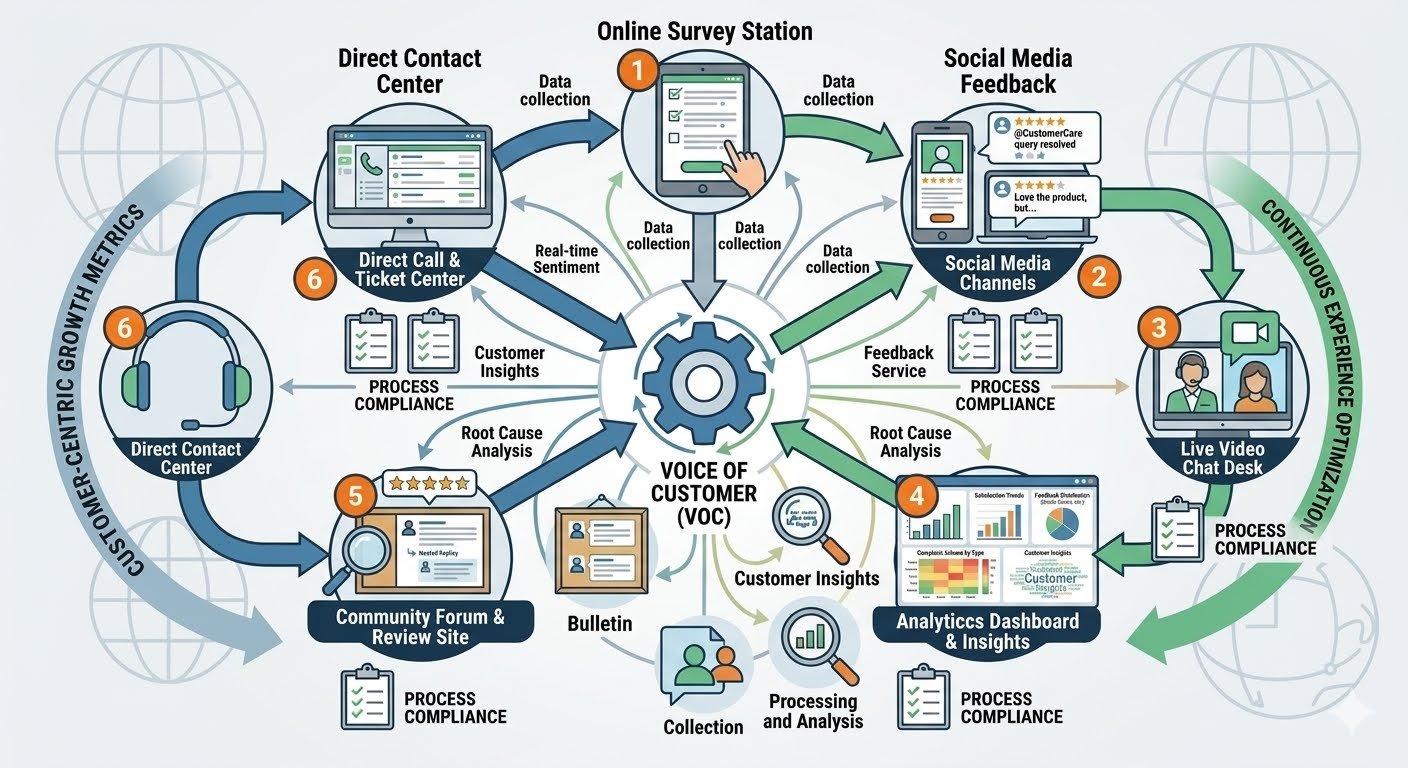
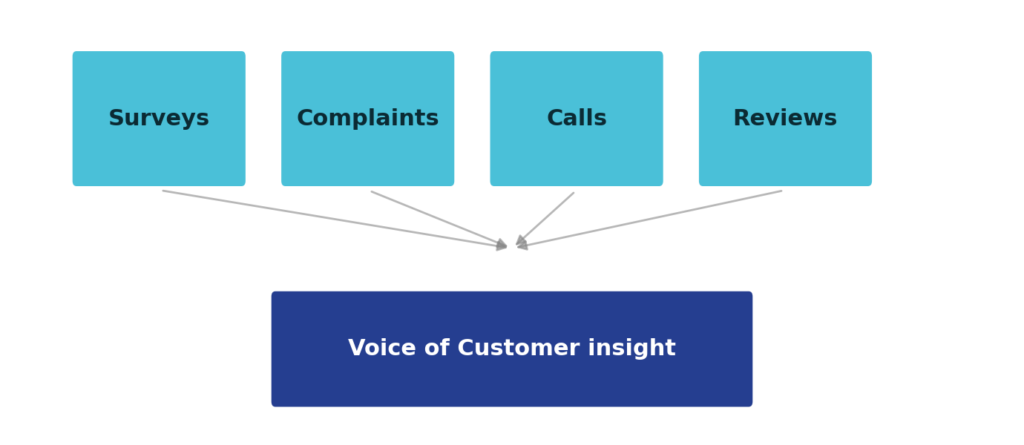
Voice of Customer (VoC) is the practice of systematically capturing what customers actually experience, want, and complain about — through surveys, calls, complaints, reviews, and direct feedback — and turning that into structured insight a business can act on.
It sounds obvious, but most businesses don’t do this well. They rely on internal assumptions about what customers want, instead of the customers’ own words.
Why the Gap Exists
A company might measure its loan approval process as “fast” because it meets an internal service-level target. But if the customer never gets a status update and has to call three times to find out what’s happening, they don’t experience it as fast at all.
That mismatch — between what a business thinks is good service, and what the customer actually experiences — is exactly what VoC is meant to catch.
How It’s Actually Done
- Surveys and NPS: structured, ongoing ways to ask customers directly how they feel.
- Complaint analysis: treating complaints as data, not just individual incidents to close out.
- Call and interaction reviews: listening to real customer conversations to catch friction that surveys miss.
- Journey mapping: combining feedback with the customer’s actual step-by-step experience to find exactly where things break down.
Why It Matters
Without a real Voice of Customer process, businesses end up improving things that don’t actually matter to customers — while the real friction points go unnoticed until customers simply leave. VoC turns “we think customers want this” into “we know customers want this,” backed by real data instead of assumption.